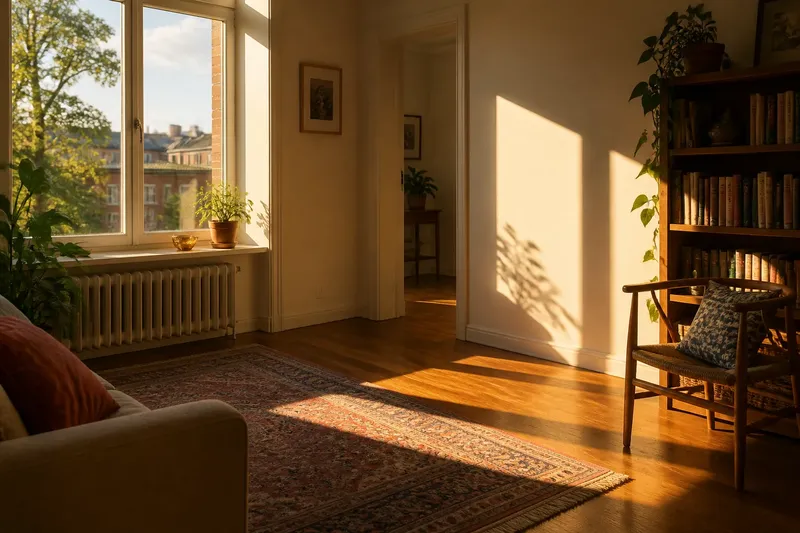
A Winter Window Watch: Follow One Patch of Light
A winter window watch turns a passing patch of daylight into a quiet daily ritual, with simple notes that reveal changes in shape, colour and view.
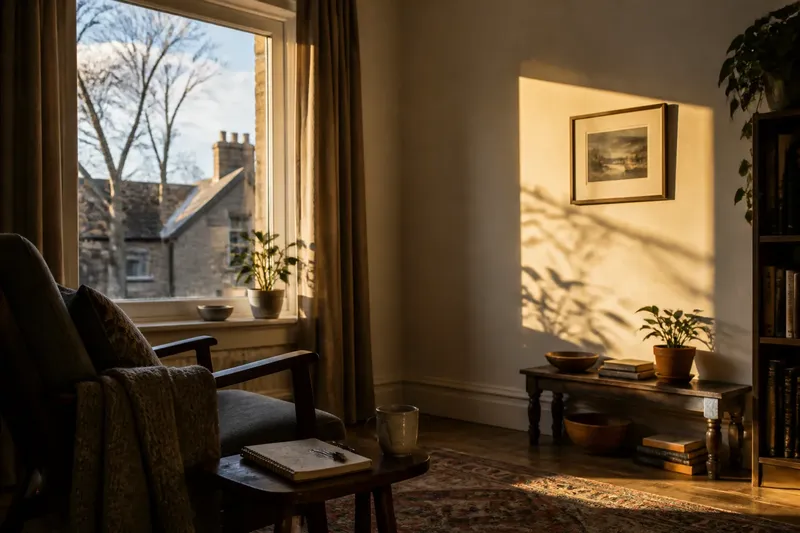
The most common mistake in a winter window watch is choosing a bright spot and expecting it to sit still like a mark on a wall. It shifts, thins, blurs or disappears, and the notes can start to feel like a failed attempt to keep up. The point is not to pin the light down. Choose one comfortable view, return to it at a few loosely chosen times, and notice what the patch is doing today.
A small routine makes that easier. Use a chair you can sit in comfortably, a window you can approach without awkward reaching, and a notebook or a few lines in your phone. Your record is a description, not a set of measurements. It can help you notice how winter daylight behaves in your particular view without turning the day into a project.
Where should you watch from?
Begin with a place where you can see part of the room and a stable outdoor reference, such as a roof edge, tree trunk or neighbouring wall. The indoor surface gives you somewhere to follow a sunlit patch; the view beyond the glass helps you notice whether cloud or changing brightness is affecting the scene. You do not need an uninterrupted panorama. A narrow, familiar view is often easier to revisit.
Comfort matters more than the prospect. Pick a seat that does not require standing on furniture, leaning across a sill or pressing against a cold pane. Keep the route to it clear, and choose a spot where you can settle for a few minutes. If the window is difficult to reach or makes you uncomfortable, watch the patch from farther back or choose another window.
Look for a patch of light that appears on a wall, floor, curtain or tabletop during some part of the day. A pale surface can make subtle changes easier to see, but a darker surface may show a bright edge more clearly. Avoid choosing a spot where a frequently opened door, moving screen or busy passage will constantly change the view.
Say you have a chair beside a living-room window and a rectangle of sun sometimes reaches the opposite wall. You could note that the rectangle touches the lower edge of a framed picture, then later describe whether it has narrowed, softened or moved out of sight. The picture is a reference, not a ruler; the useful observation is how the patch relates to something you recognise.
What makes a patch hard to follow?
Sometimes there is no clear patch at all. Cloud may soften direct sunlight until the room is evenly lit, or the daylight may arrive at a different angle from the one you expected. That is not a blank day. Write down what you can see: for example, “wall evenly pale; no distinct bright edge”. A diffuse glow is still part of the day’s light.
Cloud can also change the scene between visits. A bright patch may vanish behind a cloud, then return with a softer outline. If you write only “gone”, the note leaves out a likely change in conditions. Add a short description of the surrounding light—flat, milky, bright or dim—and whether the patch comes back. These are ordinary impressions, not formal weather categories.
Reflections can be misleading. A passing glint from glass or a glossy surface may look like sunlight on the wall, then flicker away when you shift position. Check whether the bright area stays attached to the same surface and whether it has a recognisable edge. If it does not, note “glare” or “reflection” and follow a steadier patch instead.
Indoor changes can confuse the picture too. A lamp, a curtain pulled partway across the window, or a plant moved onto the sill may alter what you see. If something in the room changes, mention it briefly in that day’s note. There is no need to undo every change; you are trying to describe the view as it is, not preserve a display.
How can you make a routine you will keep?
Choose a few moments that fit the shape of your day rather than setting an exact timetable. Morning, later afternoon and the approach of dusk might suit one household; another person may manage only a single look between ordinary tasks. A rough time of day is enough. The routine should make noticing easier, not create another appointment to fail.
At each visit, describe the same handful of features in plain language:
- Where: Which familiar surface holds the patch?
- Shape: Is it a bar, a pool, a sharp-edged block or a diffuse glow?
- Edge: Does the boundary look crisp, feathered or broken?
- Colour: Does the surface look warm, cool, pale or richly lit?
- Surroundings: Is the rest of the room bright, dim, cloudy-looking or evenly lit?
- Change: Has the patch appeared, shifted, softened or disappeared since your last look?
Pick only the details you can comfortably notice. A short line such as “late afternoon: narrow strip on the wall, softened edge, room still bright” is more useful than a long description you cannot sustain. If you miss a visit, leave a gap. Do not fill it by guessing what the light must have done.
It can help to keep the notebook near the chair, or use a note on your phone if that is simpler. Avoid turning the routine into a hunt for exact times, angles or dimensions. A watch can remind you to look, but timing each change to the minute is not needed. The rewarding part is the return: the same view meeting a different slice of the day.
Why might the patch disappear or change shape?
What if there is no direct sunlight?
Record the softer light around the room, or watch a bright area on a curtain or floor that remains visible under cloud. Some winter days offer no sharp patch, and that absence is part of the observation rather than a reason to abandon it.
What if the patch is gone before the next visit?
Note where it was last seen and what the room looks like now. The change may have happened gradually or quickly; unless you were present, leave that uncertainty open rather than inventing a path between observations.
What if the view keeps changing indoors?
Describe the change that matters, such as a curtain drawn or a lamp switched on, then decide whether that view is still comfortable to follow. If not, choose a steadier surface or another window and begin a fresh set of notes.
What if the patch is too faint to describe?
Use broad words such as “slightly brighter than the wall” or “soft glow near the sill”. You can also note that the patch was difficult to distinguish; forcing a precise description would add confidence, not clarity.
How do you compare notes without measuring?
Read a few entries together and look for recurring descriptions. Perhaps the patch tends to appear on one part of the wall in the morning, or perhaps its edge is easiest to see when the sky is clear. Treat these as patterns in your notes, not rules that must hold every day. Cloud, indoor lighting and small changes in the room can all alter what reaches your eye.
Keep comparisons grounded in what you actually wrote. “The bright area was broader today” is a description; “it moved by a handspan” turns a casual impression into a measurement you may not have intended to make. If you want a visual reminder, a simple sketch of the patch beside a recognisable object can preserve its general form without pretending to be to scale.
Not every detail deserves a record. It is not worth the effort to photograph the window at every visit, mark boundaries on the wall or chase the patch from room to room. Those habits add fuss and can make a quiet observation feel like a task. A few words, written when convenient, are enough to keep the thread.
When should you change the view?
Change windows if the current one is uncomfortable, obstructed or rarely offers anything you can see. A room with a different orientation may give you a more distinct patch, while a sheltered interior view may be preferable if the glass is cold or the seat is awkward. If you move, note the new location so you do not mistake the changed view for a change in the light alone.
Window glass, curtains, nearby buildings and bare branches all shape the scene. A tree can break a patch into small fragments; a sheer curtain may soften its outline; condensation can blur the view. You need not remove or alter anything. Simply name what is between you and the light when it seems relevant, then decide whether that filtered view is interesting enough to keep.
For a winter window watch, the main search phrase is also the simplest description of the habit: return to one patch of daylight and notice its changing outline. Keep the seat safe, the observations modest and the notes honest about what you could not see. When the patch fades, the day has not run out of material; the softened room, the clouded window and the patch’s absence all belong to the view.