Blue Hour or Golden Hour: Two Different Kinds of Evening Light
Blue hour or golden hour? Learn how colour, contrast and pace differ so you can choose the evening light that suits your walk, view or observation.
The common mistake with blue hour or golden hour is treating them as interchangeable names for a pretty sunset. That can mean arriving for warm light when you wanted a quiet, even view, or waiting for blue twilight after the colour you came to notice has already faded. Choose by what you want to see, and the evening becomes easier to read.
What separates golden hour from blue hour?
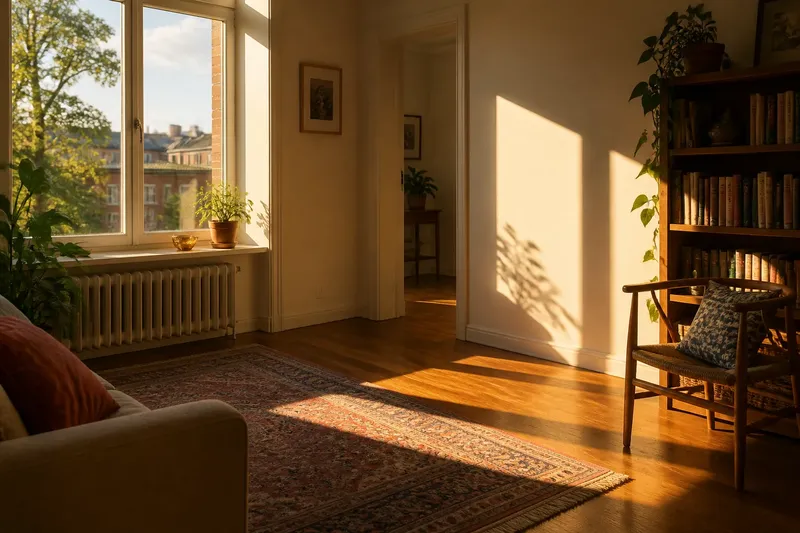
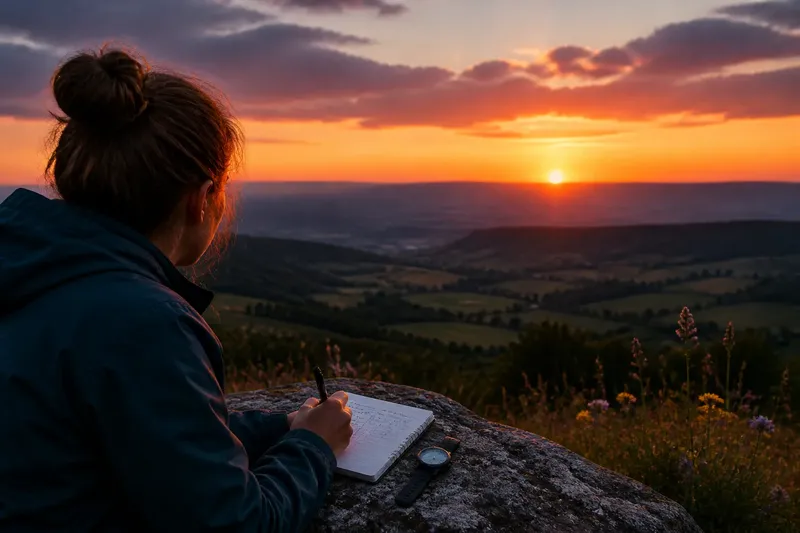
Golden hour is the warm light around sunset, when the Sun sits low and its light travels through more of the atmosphere. Surfaces can take on honey, copper or peach tones; long shadows pick out the grain of a wall, the edges of leaves and the shape of a path. The name describes an appearance, not a fixed length of time.
Blue hour comes after sunset, as the sky darkens but still carries a cool, diffuse glow. The direct sun has slipped from view, and open shade can look blue or slate-coloured beside lamps and lit windows. It is a twilight interval, not one precise minute on a clock: cloud, the horizon and the season all affect how it looks.
Neither interval is simply better. Golden hour makes direction and texture conspicuous; blue hour softens the scene and makes contrasting light sources easier to notice. A few minutes can change the balance, so look at the light itself rather than relying only on a forecast label or an app’s suggested time.
Which light suits the scene you have in mind?
Do you want to follow shadows and surface texture?
Choose golden hour. Low-angle sunlight creates long, clear shadows that reveal ripples in a footpath, the ridges of bark or the relief of a stone wall. It suits a slow walk through a park or along a street where you want to watch the light move across surfaces.
Are you watching a skyline, windows or lamps come into view?
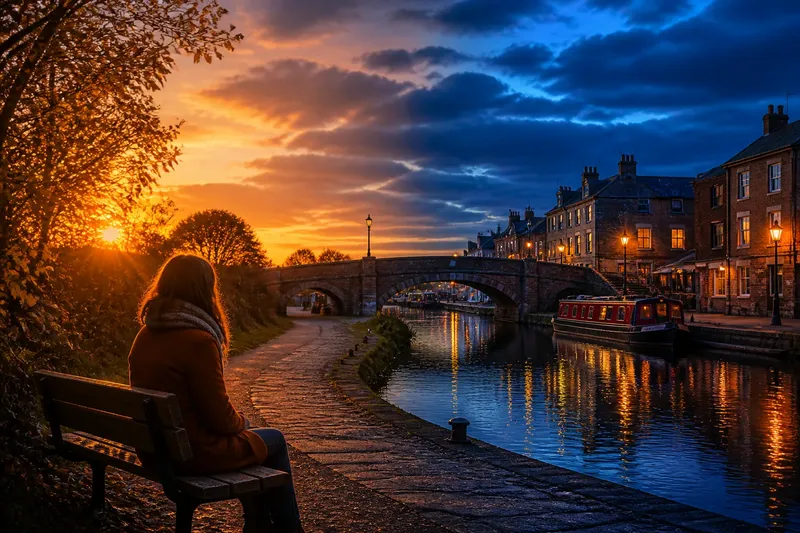
Stay for blue hour. The fading sky can retain detail while illuminated windows and streetlights begin to stand out. A bridge, a row of shops or rooftops against open sky may feel more legible once the sun’s direct glare has gone.
Would warm colour help you notice a familiar place differently?
Try golden hour, especially if the view includes brick, dry grass, autumn leaves or a west-facing wall. The warm cast can make colour changes easy to follow. If the scene already has strong red or orange tones, compare it with the cooler light later rather than assuming more warmth will add clarity.
Do you prefer a gentler, less directional view?
Choose blue hour. With the sun below the horizon, the remaining light is more diffuse than direct sunset light, so hard-edged shadows are less prominent. It can suit quiet observation of the sky’s colour, distant shapes and the transition from natural light to artificial light.
How do cloud and surroundings change the choice?
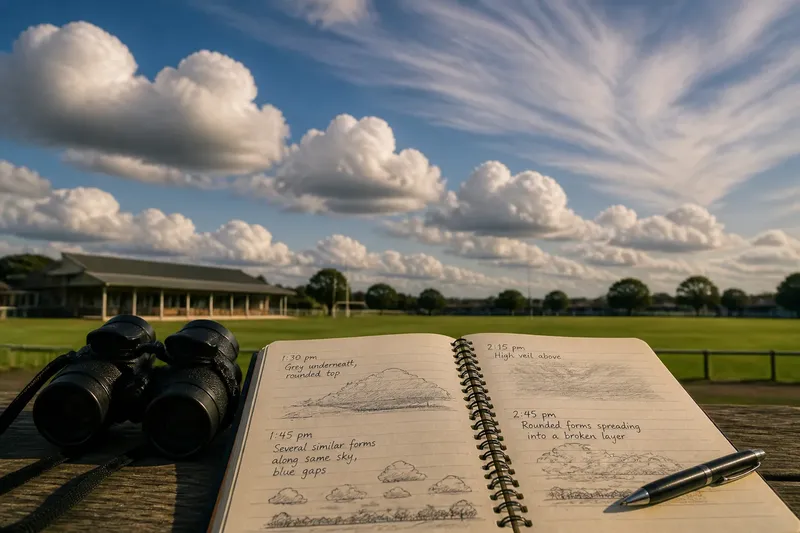
Cloud can enrich either interval, but it does not make them the same. High cloud near sunset may catch warm light and form a bright edge against a darker underside. A thick bank on the western horizon can hide the sun’s direct colour, while brighter sky away from it still supplies a softer show.
At blue hour, cloud layers may appear as different shades of grey-blue, and gaps can hold a lighter band above the horizon. In a city, illuminated signs or windows add warm points of colour; in a darker place, the sky may be the main subject. Give your eyes a moment to adjust after leaving a bright room or shop, then compare the sky with the land rather than staring at one bright lamp.
Your position matters, too. A west-facing viewpoint may offer a clear view of sunset colour, while a narrow street can hide the horizon but reveal light on façades. For blue hour, a view with some open sky often helps, though a sheltered square can be interesting if its lamps and windows are part of what you want to observe.
What if you can only stay for one interval?
Say you have time for one unhurried stop on a walk beside a canal. If your aim is to watch reflections stretch beneath a low bridge and pick out the texture of the towpath, arrive while the sunlight is still warm and directional. If you would rather see the bridge lights reflected against a cooler sky, linger after sunset. The starting point is the same canal; the choice follows the detail you hope to notice.
If you are unsure, choose a spot you can revisit safely and look at one feature throughout the transition: a tree line, a roof edge or the colour of a patch of water. You need not make a formal record. Noticing when a shadow loses its edge, or when a lamp begins to compete with the sky, is enough to tell you which interval holds your attention.
It is not worth trying to pin either hour to a universal number of minutes. A rigid timetable can distract from the visible change, and local conditions shift the experience. Check the sunset time if you need help planning your arrival, then let the actual sky decide when to stay or move on.
How should you plan an unhurried observation?
Pick a place with a clear view of the feature you care about and enough room to pause without obstructing others. If the ground may be uneven or the path busy, choose a comfortable, permitted stopping place and keep your attention on your footing when moving. A small notebook can help you jot down a colour or cloud shape, but it is optional; looking carefully is the point.
For a more useful comparison, return to the same view on another evening and notice one difference at a time: the cloud cover, the warmth of a wall, or how quickly the skyline merges with the sky. This is not a contest between two named hours. It is a way to learn which conditions make a particular place rewarding to watch.
Blue hour or golden hour is ultimately a choice between kinds of attention. Go for golden light when shadows, texture and warm colour are your subject; wait for blue twilight when you want quieter contrast, open-sky tones or the first lamps to emerge. If the evening changes its mind, follow the change: the most useful observation may be the moment one kind of light gives way to the other.